
Christian ministry projects in South Sudan: urgent
Implementing Christian ministry projects in South Sudan is an urgent and critical endeavor designed to save lives and rebuild a fractured nation.
Amidst restricted humanitarian access and acute food insecurity, Reaching Mankind for Christ (RMC Ministries) operates with a distinct, guiding mission: To Reach, To Teach, To Change all Nations. Through targeted, verifiable development, the organization is actively working to stabilize local communities. Every week, RMC teams visit hospitals, orphanages, prisons, schools, and remote villages to pray with people, share the Gospel, and provide tangible relief.
However, as the ministry’s reach grows, so does its need for physical space. Specifically, as enrollment applications at F.I.S.H. Academy increase, space on the educational campus has become severely limited. To safely accommodate this growing student body and ensure the long-term protection of vulnerable youth, the ministry has outlined several urgent infrastructure goals and organizational prayer needs.
The critical need for educational infrastructure
The educational system within South Sudan presents severe operational challenges, particularly for less fortunate families. Attending a public school is not a free public service; the government charges a specific cost per child. This financial barrier strictly excludes thousands of young children across the nation who lack the financial means to pay for their schooling.
Furthermore, the national educational infrastructure consistently struggles to reach its full potential. The system is hindered by systemic poverty, historical governmental failures, ongoing violence, and the generally poor health of citizens. In many areas, schools remain physically inaccessible. When students are able to access a school, they frequently find facilities that are highly overcrowded, drastically underfunded, and operated by unqualified teachers.
At RMC Ministries, the immediate goal is to provide vulnerable youth with a place in a classroom and a scholarship to stay in school. By investing in young people today, the organization is helping equip the next generation to lead, serve, and strengthen South Sudan. However, the physical space required to fulfill this mission is currently insufficient to meet the rising demand.
Advancing Christian ministry projects in South Sudan: campus construction
To continue delivering quality education and biblical discipleship, funding and executing Christian ministry projects in South Sudan is a top operational priority for the organization. The ministry has identified a comprehensive list of specific F.I.S.H. Academy buildings that urgently need to be constructed to sustain the student body.
The immediate construction goals include building new, dedicated classrooms to alleviate current overcrowding and provide a safe learning environment. Additionally, the academy’s curriculum requires a dedicated science lab and a comprehensive library to provide a robust academic foundation.
Recognizing the necessity of digital literacy in the modern economy, the ministry also plans to construct a permanent computer lab. With a functioning computer lab, students can effectively learn the basic digital skills that are essential in today’s world. Finally, to ensure the physical well-being of the students on campus, there is a critical need to construct a nurse’s room and a sick bed facility. As the ministry notes, it is important not just to look at the buildings themselves, but to look at what they are built for—creating tangible opportunities that will serve the nation for generations.
Expanding dormitories to protect vulnerable girls
One of the most vital Christian ministry projects in South Sudan is the expansion of the current student dormitories. Dormitories provide young people with a safe, secure place to live while they study. In South Sudan, providing a secure, monitored living environment is an essential form of physical and social protection, particularly for young women and girls.
Navigating harmful cultural norms
Gender roles in the country are highly patriarchal and rigidly defined from birth. Men are viewed as the primary breadwinners and the sole decision-makers, while females are strictly expected to be house makers and childbearers. This rigid patriarchal culture has left women deeply marginalized and frequently excluded from political activity or community decision-making. Due to the nation’s dedication to maintaining these traditional gender roles, formal education remains largely inaccessible for many women and girls. You can read more about the systemic challenges facing women regarding gender equality in South Sudan.
The threat of forced marriage
Systemic poverty and cultural traditions combine to create a highly dangerous environment for female youth. Families frequently marry off their daughters in exchange for a dowry. An arranged marriage of a young girl to an older man can bring a girl’s family up to 100 cows, with each cow valued at approximately $1,000.
South Sudan is one of only six countries globally that does not specify a minimum legal age for marriage. Current statistics show that 45% of girls in the country are married before their 18th birthday. While the Transitional Constitution states that marriage requires free and full consent, this legal requirement is frequently ignored across many tribes. Furthermore, polygyny is widely practiced and legal, meaning a man can have as many wives as he can afford to pay the bride price for.
Education as protection
By expanding the current dormitories at F.I.S.H. Academy, RMC Ministries provides vulnerable girls with a safe alternative to forced marriage. Education directly combats these severe statistics. Girls who attend school have a significantly lower risk of early marriage, early pregnancy, and sex crimes. Furthermore, children born to an educated mother have a 50% higher chance of survival.
Along with housing for the growing student body, the ministry also has an urgent prayer need to construct dedicated dormitories for its essential employees, ensuring staff members can safely reside on campus to monitor and educate the students.
Nutrition and agriculture
To properly support an expanding student population, the campus infrastructure must actively evolve to meet basic daily nutritional needs. RMC Ministries is urgently seeking the resources necessary to construct a new cafeteria. This facility will provide a dedicated space where students can eat, study, and participate in safe fellowship. Alongside the cafeteria, there is a pressing need to construct a larger kitchen and store facility to safely prepare and house meals for the increased number of students.
Addressing student nutrition goes beyond the kitchen walls. Given the acute food insecurity affecting millions of people across the country, teaching sustainable agriculture is highly necessary. The ministry is currently working to enhance its existing chicken and pig farms located on the campus. Furthermore, the organization has identified the initiation of a broader agricultural farm project as a primary organizational prayer need. These agricultural initiatives will provide a sustainable food source for the students and staff while offering practical vocational training in livestock management and agricultural economics.
Equipping the next generation: Vocational facilities
RMC Ministries firmly believes that every opportunity provided today helps shape a more resilient tomorrow. To equip the next generation for meaningful careers, the ministry focuses heavily on vocational training for future employment. Learning practical skills allows students to build confidence, break cycles of systemic poverty, and opens new possibilities for sustainable local commerce.
To facilitate this training, the organization urgently needs to construct specialized vocational buildings on the campus. The planned facilities include dedicated sections for several essential trades:
- Tailoring: Teaching students how to produce and mend garments for the local market.
- Soap making: A specific section designed for students to learn how to make soap, directly teaching vital entrepreneurship skills while improving community hygiene.
- Bead making: Providing training in crafting marketable goods.
By investing in these specific spaces, the ministry ensures that graduates leave F.I.S.H. Academy fully prepared to lead, serve, and strengthen their local economy.
Developing essential community infrastructure
Before these larger Christian ministry projects in South Sudan can be fully realized, the ministry must finalize several foundational infrastructure tasks. The organization is actively working to finish the official registration of its land. Once the land is fully legally secured, the team urgently needs to finish constructing the perimeter fence to ensure the strict safety and security of the students and staff living on campus.
Additionally, securing a reliable source of clean water is a critical priority for the entire community. One of the ministry’s most pressing prayer needs for the upcoming year is to finish the construction and motorization of the campus water well. Access to clean water is essential for preventing waterborne diseases and supporting the daily operations of the growing school, the kitchen, and the expanding agricultural farms.
Finishing the Imprint Radio Broadcast Facilities
While the physical campus provides essential support to the local community in Nimule, the ministry also recognizes that faith and encouragement can travel further than we sometimes imagine. Through RMC Imprint Radio, messages of hope and biblical teaching reach people wherever they are. This broadcast serves as a lifeline for individuals in remote villages and distant refugee camps who may not have access to a physical church.
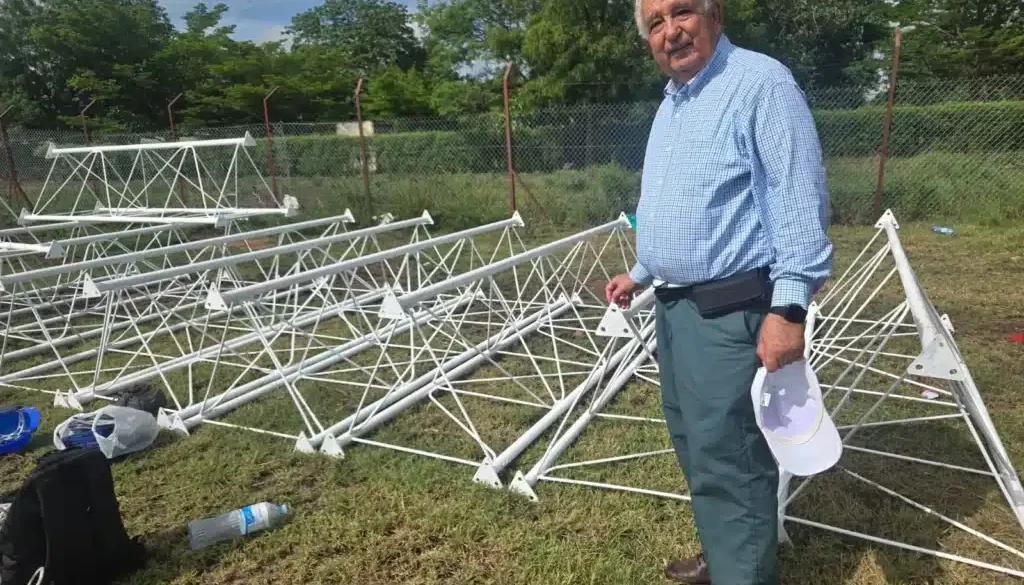
However, the radio ministry requires physical infrastructure to maintain its daily operations. The organization has finished the construction of the main Radio Tower, thanks to donations from CMML US. Alongside the tower, the ministry must construct dedicated radio buildings. These necessary structures specifically include:
- A permanent Transmitter Room to house sensitive broadcasting equipment.
- A fully equipped Radio Studio for the presenters.
Completing these structures will stabilize the broadcast signal and allow the ministry’s dedicated presenters to continue sharing God’s love through action across the region.
FAQ Section
- Why does F.I.S.H. Academy need to expand its campus? Because enrollment applications are steadily increasing, space on the current educational campus has become very limited. To safely accommodate the growing student body, the ministry urgently needs to expand its dormitories, kitchen, cafeteria, and classroom spaces.
- Why are student dormitories so important in South Sudan? Dormitories provide a safe living environment that physically protects vulnerable youth. For girls, staying in a secure boarding school prevents families from forcing them into early, arranged marriages in exchange for a dowry.
- What specific educational buildings is the ministry trying to construct? The ministry’s prayer needs include constructing new classrooms, a permanent computer lab, a science lab, a library, and a nurse’s room/sick bed facility to ensure the students receive a comprehensive and safe education.
- How is the ministry addressing food and nutrition for the students? Alongside building a new cafeteria and kitchen, the ministry is actively working to enhance its existing chicken and pig farms. They also plan to start a broader agricultural farm project to provide sustainable food and practical vocational training in agriculture.
Conclusion
Through these Christian ministry projects in South Sudan, RMC Ministries is actively transforming a landscape defined by hardship into a foundation for future growth. By urgently pursuing the expansion of F.I.S.H. Academy, including new dormitories, vocational buildings, and a permanent computer lab, the organization is systematically dismantling the barriers of poverty and dangerous cultural traditions.
How you can help
The ability to construct these vital buildings and safely house vulnerable students relies entirely on the generosity and prayers of external supporters. Here are the practical ways you can stand with the resilient people of South Sudan today:
- Donate: Provide the critical financial resources necessary to construct the new student dormitories, the cafeteria, the science lab, and the permanent radio station.
- Pray: Join the team in praying for the successful completion of the land registration, the perimeter fence, and the essential water well to keep the campus safe and healthy.
- Sponsor: Support a vulnerable student’s education. A scholarship provides a place in a classroom and a safe dormitory bed, actively protecting young girls from the immediate threat of early forced marriage.
- Share the ministry: Raise awareness about the critical need for educational infrastructure and female protection in South Sudan by sharing RMC’s verifiable mission with your church, family, local community & on social media platforms.
- Support a specific project: Contribute directly to the enhancement of the student-led chicken and pig farms, or help fund the construction of the new vocational buildings for tailoring and entrepreneurship.


