
Girl education in South Sudan: urgent needs
Systemic barriers to girl child education in South Sudan
To understand the urgent need for educational interventions, one must examine the societal frameworks that govern daily life in East Africa. The issue of gender inequality in South Sudan is heavily shaped by prevailing cultural norms and a deeply rooted patriarchal culture. This framework rigidly defines gender roles from birth, establishing a strict division of labor and opportunity.
Under these traditional cultural expectations, men are viewed as the primary breadwinners, decision-makers, and economic providers for their families. Conversely, women and girls are strictly seen as homemakers and childbearers. It is expected that young girls follow their mother’s domestic behavior, while boys learn from their fathers. These harmful gender norms have left women in South Sudan marginalized and almost entirely excluded from participating at any level of community decision-making or political activity.
This systemic exclusion has fostered a widespread social and religious norm that actively opposes female education. Because families do not value female literacy, they frequently refuse to pay for their daughters’ basic needs or educational tuition. Consequently, school enrollment for girls remains incredibly low across the country, grossly affecting their livelihoods, quality of life, and educational opportunities.
The consequences of this educational exclusion extend far beyond the classroom. South Sudan has some of the highest rates of maternal mortality in the world. However, data verifies that children born to an educated mother have a 50% higher chance of survival. This life-saving statistic demonstrates that expanding girl child education in South Sudan is a vital public health necessity. When a girl is permitted to attend school, she is equipped with the knowledge needed to care for her future family, effectively breaking generational cycles of poor health, high infant mortality, and extreme poverty.
Threats of the dowry system and forced marriage
In addition to rigid gender roles, the intersection of severe poverty and ancient cultural traditions poses an immediate physical threat to young women. Within many South Sudanese tribes, it is a long-standing cultural tradition for parents to marry their daughters off early in exchange for a dowry.
In South Sudan, the arranged marriage of a young girl to an older man often brings the girl’s family substantial wealth, measured in livestock. Some girls bring their families up to 100 cows, with each cow valued at approximately $1,000. This transaction turns young girls into a source of immediate wealth for their families, creating a powerful economic incentive for parents to pull their daughters out of school and force them into marriage.
This economic pressure leads directly to the widespread crisis of South Sudan forced marriage. It is an unfortunate reality that early or forced marriage is a distinct likelihood for nearly half of all South Sudanese girls. Current statistics show that 45% of girls are married before their 18th birthday. This practice is further enabled by the country’s legal landscape. South Sudan is one of only six countries in the entire world, alongside Equatorial Guinea, Gambia, Saudi Arabia, Somalia, and Yemen, that does not specify a minimum legal age for marriage in its national laws.
While the Transitional Constitution of 2011 states that every person has the right to marry a person of the opposite sex and that no marriage shall be entered into without free and full consent, this constitutional right is frequently ignored across many tribes. Additionally, the practice of polygamy, specifically polygyny, is prevalent, legal, and widely accepted. A South Sudanese man can legally marry as many women as he can afford to pay the bride price for, meaning a man’s wealth directly dictates his number of wives. This system further increases the demand for young, school-age brides, placing adolescent girls in constant danger of exploitation.
Urgent and life-saving interventions
To combat these systemic abuses, RMC Ministries implements structured educational programs. At F.I.S.H. Academy, the organization does not treat schooling as a passive academic exercise. Instead, the ministry approaches girl child education in South Sudan not merely as an opportunity, but primarily as a physical and social shield.
Girls who attend school have a significantly lower risk of early marriage, early pregnancy, and sex crimes. By keeping girls engaged in learning, the ministry directly mitigates the risks associated with their cultural environment. The organization achieves this protective mandate through four specific, life-saving interventions.
- Providing safe dormitory facilities
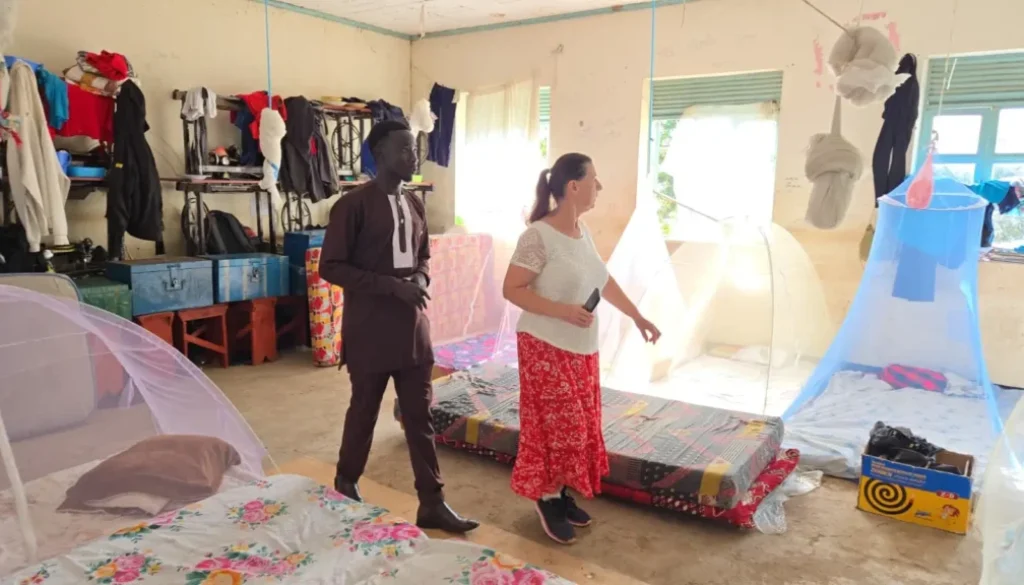
The first and most immediate physical intervention is the provision of secure boarding environments. For many girls, remaining in their family home means living under the constant threat of an arranged marriage. When parents experience financial hardship, the temptation to trade their daughter for a dowry of cows is high.
To eliminate this danger, RMC Ministries provides safe student dormitories on its campus. By residing in secure, supervised boarding quarters, female students are physically separated from the immediate pressures of the traditional dowry system. This boarding environment keeps them safe from parents who might otherwise force them into marriages with older men.
Currently, as enrollment applications increase, space has become very limited. To accommodate the rising demand, the ministry has listed expanding its current dormitories as one of its most pressing RMC Ministries projects and building goals. This physical expansion is essential to ensure that no vulnerable girl is turned away due to a lack of safe housing.
- Distributing F.I.S.H. Academy scholarships
The second intervention is the distribution of targeted F.I.S.H. Academy scholarships for vulnerable youth. Attending public school in South Sudan is extremely challenging for less fortunate families because education is not free. The government charges a specific cost per child, which immediately excludes impoverished youth from the classroom.
To remove this financial barrier, RMC Ministries heavily subsidizes female enrollment. The ministry’s scholarship program specifically targets young women at high risk of exploitation, including those originating from the Nuba Mountains. By covering the complete costs of tuition, uniforms, and learning materials, the ministry ensures that poverty does not force a family to sell their daughter into marriage. This financial support has successfully enabled hundreds of girls to complete their secondary education, transforming their future prospects.
- Practical vocational training and job creation skills
The third intervention focuses on equipping female students with the practical skills necessary to achieve financial independence. Unlike traditional local institutions, F.I.S.H. Academy is dedicated to preparing students to be job creators rather than job seekers.
The curriculum includes specialized vocational training in:
- Tailoring and garment production: Equipping girls with a highly marketable trade to generate an independent income.
- Soap making:Teaching the principles of business management while producing hygiene products that improve community health.
- Bead making and cultural crafts: Training students to manufacture and sell consumer goods in local markets.
- Information and Communication Technology (ICT): Teaching practical computer skills at no extra cost to families, preparing youth for the modern digital economy.
By mastering these trades, female graduates are empowered to establish their own small businesses. This financial self-sufficiency directly challenges the patriarchal norm that women must depend entirely on husbands for economic survival.
- Developing sustainable campus infrastructure
The fourth life-saving intervention is the development of clean water and nutritional infrastructure on the school premises. In South Sudan, the rigid patriarchal division of labor dictates that women and children bear the physical burden of securing household water. This expectation frequently forces young girls to walk long, dangerous distances to fetch water, exposing them to physical violence and keeping them out of school.
To alleviate this daily burden, RMC Ministries prioritizes campus infrastructure development. The ministry successfully completed a motorized borehole on its premises, providing a reliable source of clean, safe water directly to the students and neighboring communities. This clean water access reduces the prevalence of waterborne illnesses, improves sanitation, and frees young girls from the physical chores that traditionally prevent them from pursuing an education.
The holistic impact of F.I.S.H. Academy in 2026
The success of these four interventions is clearly reflected in the ministry’s latest operational metrics. According to the July 2026 Monthly Impact & Activity Report submitted by Country Director Juma Tom Majidi, F.I.S.H. Academy is experiencing significant growth.
During the July 2026 term, the school recorded an enrollment of 249 students. Reflecting our strong commitment to girl child education in South Sudan, 199 of these enrolled students are girls, while 50 are boys. This demographic represents a remarkable 80% female enrollment rate.
To support this expanding student body, the school is served by a highly qualified and diverse staff.
Overcoming cultural obstacles to girl child education in South Sudan
Beyond academic and vocational training, the academy actively works to heal the social divisions caused by years of civil conflict. The campus hosts a dedicated Peace Club, which brings students from diverse ethnic backgrounds together to build unity, cooperation, and God-centered peace.
Additionally, spiritual formation remains a cornerstone of the F.I.S.H. Academy experience. Students participate in morning fellowship held every Monday, Wednesday, and Friday with the school chaplain, alongside a Friday evening prayer devotion. This holistic care ensures that female students do not just receive intellectual instruction, but also experience deep emotional healing, career guidance, and spiritual mentorship from visiting speakers.
Preventing the disappearance of young girls
The necessity of a centralized, secure school environment like F.I.S.H. Academy is highlighted by historical regional challenges. In neighboring refugee settlements, such as Kakuma, young boys were placed in group homes under loose adult supervision, while young girls were placed in foster families under the assumption that it would provide a nurturing environment. In practice, however, many of those girls simply disappeared, highlighting the high risk of human trafficking, domestic exploitation, and forced marriage that displaced girls face. By providing a structured, highly monitored boarding program, RMC Ministries ensures that the young women in its care are safe, accounted for, and provided with a clear pathway to a brighter future.
FAQ Section
- Why is girl child education in South Sudan so critical? Girl child education in South Sudan serves as a form of physical and social protection. Girls who are permitted to attend school have a significantly lower risk of early marriage, early pregnancy, and sex crimes. Furthermore, children born to educated mothers have a 50% higher chance of survival, making female education a direct intervention against the country’s high maternal mortality rates.
- How does the cultural dowry system affect young girls? In South Sudan, it is a long-standing cultural tradition for parents to marry their daughters off early in exchange for a dowry. Families can receive up to 100 cows, with each cow valued at approximately $1,000. Because parents stand to gain substantial financial wealth through these arranged marriages, they frequently refuse to pay for their daughters’ education, viewing them as a source of familial wealth instead.
- What is the legal age of marriage in South Sudan? South Sudan is one of only six countries in the world that does not specify a minimum legal age for marriage in its national laws. While the Transitional Constitution of 2011 states that no marriage shall be entered into without free and full consent, this requirement is frequently ignored across many tribes, leading to a 45% child marriage rate.
- How do F.I.S.H. Academy scholarships protect vulnerable students? Public education in South Sudan is not free; the government charges a specific tuition cost per child, which excludes impoverished families. F.I.S.H. Academy scholarships remove this financial barrier by providing highly vulnerable girls, including those from the Nuba Mountains, with free education, uniforms, and secure boarding housing. This boarding environment physically protects them from the immediate pressures of early forced marriage.
- What practical skills do girls learn at F.I.S.H. Academy? The academy focuses on raising job creators rather than job seekers. Female students receive hands-on training and certificates in tailoring, soap making (entrepreneurship), bead making, livestock management, and digital literacy in the school’s computer lab. These skills provide them with the tools needed to achieve long-term financial independence.
Conclusion
Confronting the deep-seated cultural and economic barriers in East Africa requires a determined, multi-faceted approach. RMC Ministries has proven that investing in girl child education in South Sudan remains one of the most effective ways to protect youth, combat gender inequality, and build a self-sustaining society. By providing a safe boarding school environment, distributing targeted scholarships, and implementing practical vocational programs at F.I.S.H. Academy, the ministry is systematically keeping young girls safe from forced early marriages. These life-saving interventions do more than provide an academic degree; they give the next generation of South Sudanese women a voice, a community of support, and the exact skills needed to transform their nation.
How you can help
The continuous operation of F.I.S.H. Academy and the safety of these young girls rely entirely on the prayers, partnerships, and financial support of external donors. Here are five practical ways you can stand with the women of South Sudan today:
- Donate: Provide the financial resources necessary to purchase educational materials, fund the computer lab, and purchase raw materials for the tailoring and soap-making vocational programs.
- Pray: Join the ministry’s prayer list. Pray for the 15 qualified teachers, the school chaplains, the volunteer guards, and the 199 young girls currently studying in Nimule.
- Sponsor: Directly fund a student’s education. By sponsoring a girl’s F.I.S.H. Academy scholarship, you provide her with high-quality education and a safe boarding bed, protecting her from the immediate threat of early forced marriage.
- Share the ministry: Raise global awareness about the ongoing crisis of child marriage and the need for female education in South Sudan by sharing RMC’s mission with your church, friends, and family.
- Support a specific project: Support RMC’s immediate building goals, specifically contributing to the expansion of the current student dormitories, the construction of the cafeteria, or the completion of the transmission and radio room to carry messages of hope further.


