
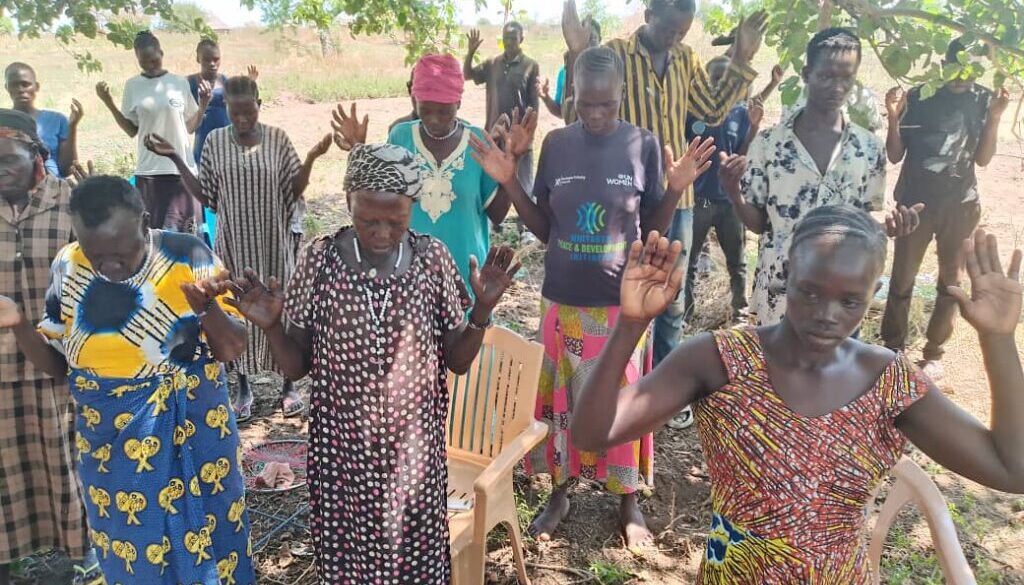
Helping women and girls build a better future in South Sudan
Women and girls in South Sudan face some of the highest rates of child marriage, educational exclusion, and gender inequality in the world. Through education, scholarships, safe boarding facilities, trauma counseling, and clean water initiatives, RMC Ministries is helping vulnerable girls build safer and more independent futures.
The reality of gender inequality in South Sudan
To effectively facilitate women empowerment in South Sudan, it is necessary to fully understand the historical and cultural landscape that dictates daily life. Gender inequality in South Sudan is heavily shaped by prevailing cultural norms and a rigid patriarchal society.
Within this culture, gender roles are strictly defined from birth. It is expected that young girls emulate their mother’s domestic behavior, while boys learn from their fathers. Under these societal rules, men are viewed as the primary decision-makers and the sole income earners, expected to provide economically for their families. Conversely, women and females are strictly seen as homemakers and childbearers.
This translates into a severe gender divide in daily tasks and labor. These harmful gender norms have left women deeply marginalized and frequently excluded from participating at any level of community decision-making or political activity. As a result, the specific needs, health requirements, and educational aspirations of women are frequently ignored by both local families and broader governmental systems.
Why forced marriage remains a major challenge
The most pressing threat to young girls in this region is the systemic practice of early, arranged marriages. The intersection of severe national poverty and traditional customs creates a highly dangerous environment for female youth.
In South Sudan, the arranged marriage of a young girl to an older man is a long-standing cultural tradition. Families frequently view their daughters as a direct source of wealth, which is traditionally measured in livestock. A single girl can bring her family a dowry of up to 100 cows, with each cow valued at approximately $1,000. Because parents stand to gain significant financial wealth through these arrangements, they frequently refuse to pay for their daughters’ school tuition or basic needs, prioritizing marriage preparation instead.
Legal Loopholes and Polygyny
The legal framework within the country offers very little protection for these girls. South Sudan is one of only six countries in the world—alongside Equatorial Guinea, Gambia, Saudi Arabia, Somalia, and Yemen, that does not specify a minimum legal age for marriage.
While the Transitional Constitution of 2011 states that every person has the right to marry and that no marriage shall be entered into without “free and full consent,” this law is frequently and openly ignored across many tribes. As a result, South Sudan forced marriage remains a prevalent crisis. Current statistics show that 45% of girls in the country are married before their 18th birthday. Early and forced marriage is a distinct likelihood for nearly half of all South Sudanese girls.
Furthermore, the practice of polygamy is prevalent, legal, and widely accepted. Specifically, polygyny is practiced, meaning a man can have more than one wife. A South Sudanese man can legally marry as many women as he can afford to pay the bride price for, meaning the number of wives a man has often depends entirely on his accumulated wealth.
How education protects girls in South Sudan
In many developed nations, education is viewed as a standard pathway to career advancement. However, in this specific context, girl child education in South Sudan operates primarily as a form of physical and social protection.
There is still a widespread social and religious norm in South Sudan that actively opposes female education. Challenges such as poverty, child marriage, and religious views all combine to hinder girls’ access to the classroom. Despite these barriers, the verifiable statistics surrounding female education are clear and highly compelling.
Girls who are permitted to attend school experience a significantly lower risk of early marriage, early pregnancy, and sex crimes. Furthermore, education actively breaks generational cycles of poverty and poor health. Data indicates that children born to an educated mother have a 50% higher chance of survival. In a country that experiences some of the highest rates of maternal mortality globally, keeping a girl in a classroom is a life-saving intervention.
How F.I.S.H. Academy scholarships are changing lives
Because attending a public school is not free and the government charges a cost per child, thousands of young children do not have the financial means to pay for their schooling. To bridge this gap, RMC Ministries established F.I.S.H. Academy, a dedicated secondary school that intentionally prioritizes the enrollment and protection of vulnerable female students.
Subsidized Enrollment and Safe Boarding Facilities
In 2024, the ministry successfully enrolled 450 vulnerable students into F.I.S.H. Academy. Recognizing the severe risks facing young women, the ministry intentionally curated this student body to be 80% girls.
To further support those at the highest risk, the organization provided 45 highly vulnerable students with dedicated F.I.S.H. Academy scholarships. This specific scholarship cohort consisted of 36 girls and 9 boys. The impact of this targeted financial support is substantial. Between the years 2021 and 2025, a total of 325 girls successfully completed their high school education through the free scholarship program provided by RMC Ministries.
Many of these female students originated from the Nuba Mountains and were officially identified as being at a high risk of forced marriage. By bringing these girls into the academy, the ministry does more than pay for their books. The organization provides a secure boarding school environment, physically separating the girls from the immediate pressures of the dowry system and keeping them safe from parents who might otherwise force them into early marriages.
Training job creators
F.I.S.H. Academy differentiates itself from other local institutions by actively preparing its students to be job creators rather than job seekers. In December 2025, the academy celebrated the graduation of 79 students. These graduates were trained in several vital disciplines designed to ensure their financial independence:
- Information and communication technology (ICT): Students utilize the academy’s new computer lab to learn essential digital skills, including operating Windows 10 and 11, and navigating standard Microsoft packages.
- Entrepreneurship skills: Female students are taught how to build and manage small businesses, directly challenging the cultural norm that dictates men must be the sole income earners.
- Poultry management: Students receive hands-on agricultural training through the school’s active poultry farm.
In December 2025, the ministry stocked the farm with 100 new chicks. The students manage this farm, raising the chickens until they are sold for $8 to $10 each. The revenue generated from this student-led project is strategically reinvested to maintain the school, support the ministry’s radio station, purchase sustainable animal feed, and provide a reliable protein diet for the ministry staff.
Giving women a voice through RMC Imprint radio
True women empowerment in South Sudan requires changing the cultural dialogue not just within the classroom, but across the broader society. To reach isolated populations, RMC Ministries operates Imprint Radio 101.5 FM under the banner “Teach for Jesus Christ”.
The station broadcasts for 17 hours every single day, from 5:30 am to 8:30 pm, Monday to Sunday. The radio signal reaches deep into remote villages in Eastern Equatoria State, areas where physical churches no longer exist due to the civil war, and crosses the border into refugee camps in Northern Uganda, including Pagirinya, Majii, and Boroli.
Easing the daily burden with clean water infrastructure
The rigid gender division of labor in South Sudan means that the heavy, physical tasks of household maintenance fall almost entirely on women and young girls. One of the most physically demanding daily tasks is securing clean drinking water.
Women and children are traditionally expected to walk long, frequently dangerous distances to fetch water for their families. This time-consuming task keeps girls out of school and exposes women to physical harm and waterborne diseases.
To directly alleviate this burden, RMC Ministries focuses on sustainable infrastructure development. In February 2026, the ministry successfully drilled a new water borehole to a depth of 65 meters at the ministry premises in Anzara. The physical drilling is complete, and the organization is currently seeking the necessary funds to motorize the well. Once motorized, this single borehole will provide clean and safe drinking water to thousands of people in the surrounding communities. This project will drastically reduce the occurrence of waterborne diseases and immediately ease the severe daily physical burden placed on local women.
FAQ
How does cultural inequality affect women in South Sudan?
Gender inequality is shaped by a patriarchal culture where roles are rigidly defined. Men are viewed as income earners and decision-makers, while women are seen strictly as homemakers and childbearers. This marginalizes women and excludes them from political activity and community decision-making.
What is the current reality of forced marriage in South Sudan?
South Sudan is one of only six countries globally that does not specify a minimum legal age for marriage. Arranged marriages of young girls to older men are prevalent, as families view girls as a source of wealth; a dowry can be up to 100 cows, valued at $1,000 each. Currently, 45% of girls are married before their 18th birthday.
How does F.I.S.H. Academy protect vulnerable girls?
Education serves as physical protection. Girls who attend school have a lower risk of early marriage and pregnancy. F.I.S.H. Academy provides free scholarships to vulnerable girls, keeping them in a safe boarding school environment away from the immediate pressures of the dowry system.
How does the new water borehole help women specifically?
Due to the strict gender division of labor, women and children bear the responsibility of fetching household water, often walking long, dangerous distances. The newly drilled 65-meter borehole in Anzara will provide local, clean water to thousands, directly easing this severe daily physical burden on women.
What is the F.I.S.H. Academy scholarship program achieving?
In 2024, the school enrolled 450 vulnerable students, 80% of whom were girls. Between 2021 and 2025, 325 girls successfully completed their high school education through the RMC Ministries free scholarship program, actively breaking cycles of poverty and forced marriage.


